

Overview
A fire alarm system is an integrated assembly designed to detect the presence of smoke or fire, alert occupants so they can leave the building safely, and notify a monitoring station or fire department during an emergency.
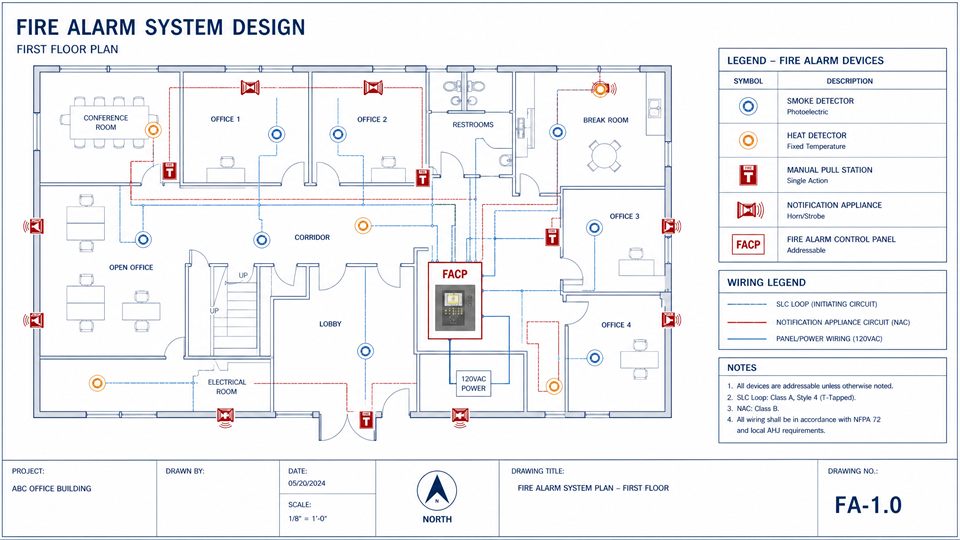
Fire alarm system includes initiating devices, notification appliances, and auxiliary devices that work together to identify alarm conditions and coordinate building safety responses.
Fire Alarm System Components
- Initiating Devices Smoke detectors, heat detectors, manual pull stations, flame detectors, sprinkler system, and suppression system among other monitored devices that result in fire alarm initialization of alarm, trouble or supervisory signals.
- Notification Appliances Bells, horns, strobes, speakers, and other appliances that alert occupants so they can evacuate quickly and safely.
- Auxiliary Devices Devices that are design to trigger upon alarm condition, including elevator recall, HVAC shutdown, stair pressurization, door release, among other devices.
Fire Alarm System Types
- Conventional SystemsConventional fire alarm systems connect multiple detection devices to a fire alarm panel and divide the building into zones. When a device activates, the panel shows the zone so responders can identify the general area or floor of the alarm.
- Addressable SystemsAddressable fire alarm system assign a unique address to each initiating device, allowing the panel to identify the precise activated device and help direct emergency responders to the actual fire .
Code Requirements
Fire Code Requirements
- 6.3.1.1. Maintenance: Fire alarm and voice communication systems shall be maintained in operable condition at all times.
- 6.3.1.2. Inspection and Testing: Fire alarm systems shall be inspected and tested in conformance with CAN/ULC-S536, "Inspection and Testing of Fire Alarm Systems."
- Fire alarm and detection system components shall be accessible for inspection or maintenance.
CAN/ULC-S536 Requirements
- 5.1 DAILY INSPCECTION -
(A) Status of the primary and remote trouble signal indicators; and
(B) Status of the primary power ON or equivalent indicator. - 6.1 MONTHLY INSPECTION - While on emergency power supply, inspect and test the following:
(A) activate One initiating field device on a rotational basis
(B) confirm alert or alarm signals on a rotational basis
(C) The primary annunciator shall be inspected to determine that the tested device annunciated correctly
(D) operation of the common audible and visual trouble signals.
(E) Confirmation of alarm transmission to the fire signal receiving centre where applicable;
(F) One emergency telephone tested on a rotational basis for two-way communication and
(G) Voice paging capability to one zone confirmed on a rotational basis. - Annual inspection includes a comprehensive test of the entire fire alarm system, including initiating devices, notification appliances, phones, paging, batteries, chargers, sprinkler and suppression interfaces, relay outputs, and signals to the monitoring station.
What We Provide
- Monthly and Annual fire alarm inspection.
- Fast turnover inspection reports.
- Deficiency repair.
- Fire alarm trouleshooting.
- Fire alarm design.
- Fire alarm installation and replacement.
- In-house FSR red seal electricians.
- Fire alarm verification.