
Overview
Fire sprinklers save lives. A well maintained fire sprinkler system is an integral part of the building fire protection system.
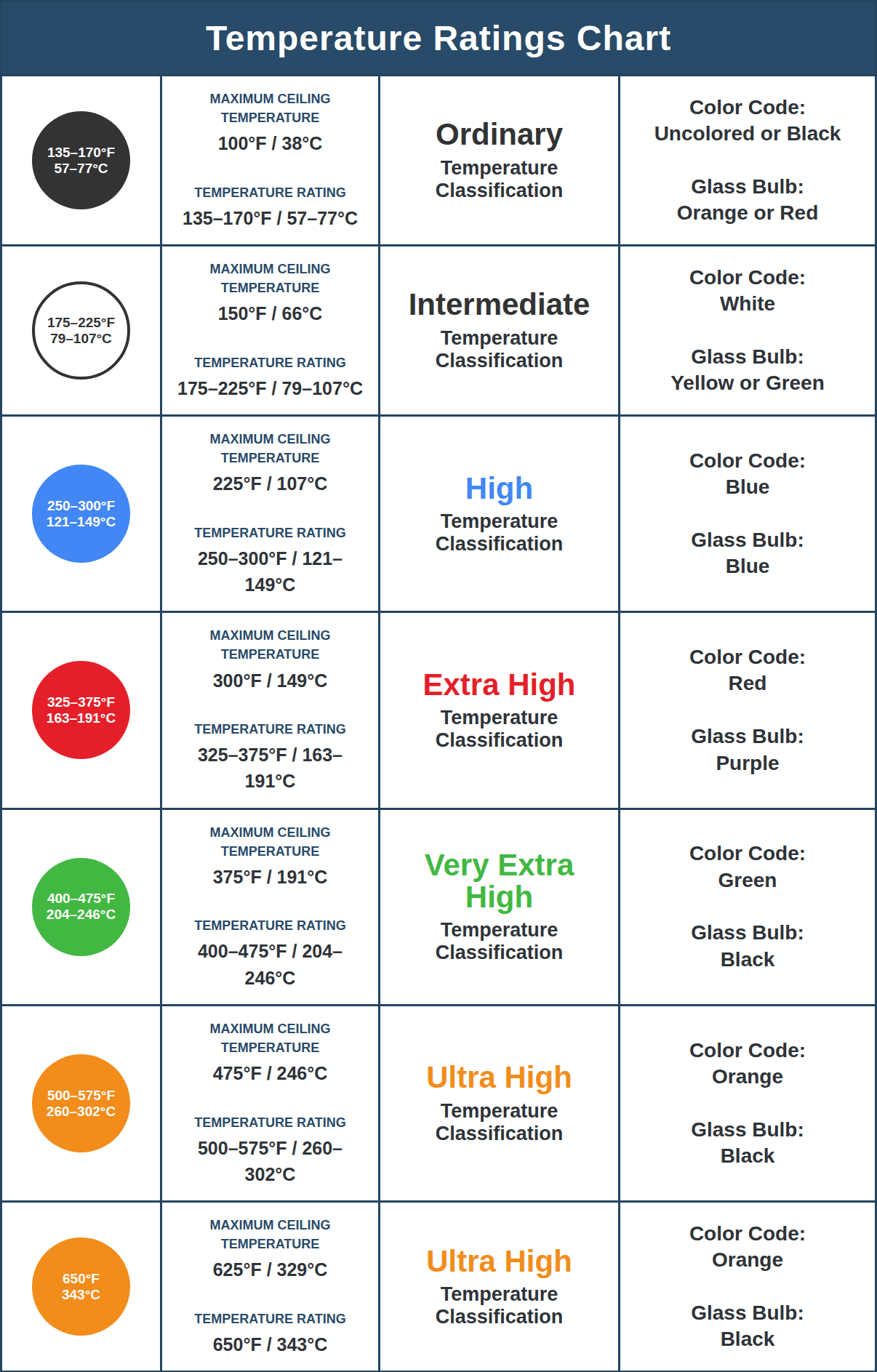
In general, There are 4 diffrent types of fire sprinkler system, however the idea remains the same, they are all consists of a water supply and a distribution piping system connected to sprinkler heads. Each sprinkler head contains either a melting metal link or a heat sensitive glass bulb that is color coded and designed to break at a pre-determined temperature.
When the sprinkler reaches its rated temperature, the heat sensitive glass bulb shatters or the metal link melts, allowing water to release.
Sprinkler System Types
- Wet Pipe SystemsWet pipe sprinkler systems are the most common systems installed. The pipes are filled with water under pressure and are designed for heated indoor applications to avoid water freezing and potential failure.
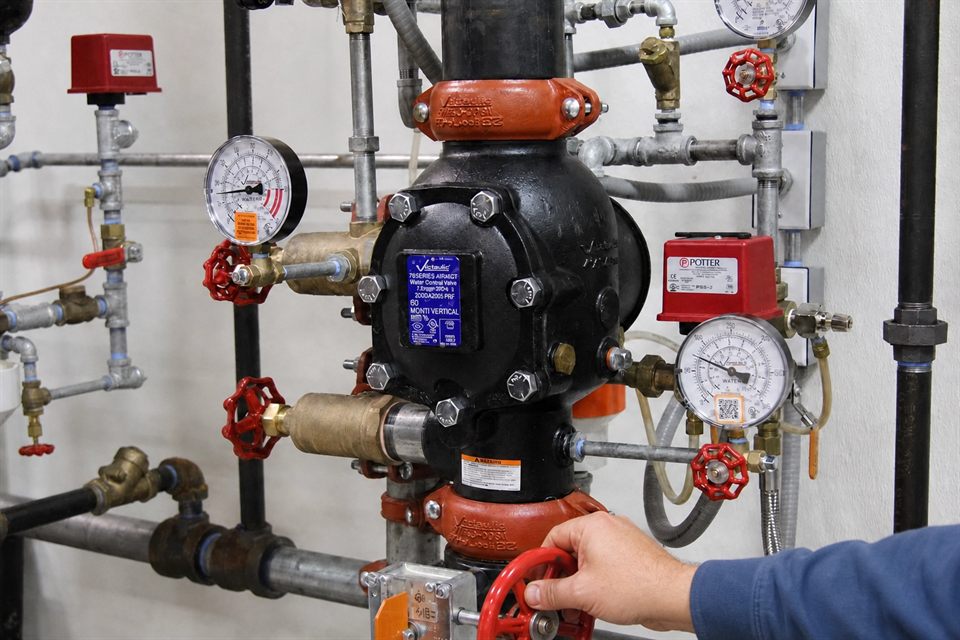
- Dry Pipe SystemsThe sprinkler piping is filled with pressurized air or nitrogen instead of water. Water is held below the control valve by that air or nitrogen. When a sprinkler head activates, the air escapes first, causing the valve to open and flood the pipes with water. Dry pipe systems are ideal for spaces where the ambient temperature may be cold enough to freeze water in a wet pipe system.
- Pre-action SystemsPre-action sprinkler systems are similar to dry pipe systems and use a two-step sequence, often in high-value areas such as data centres, vaults, museums, and art galleries where accidental activation is undesired. The system is connected to the fire alarm system, and activation of detection equipment or a manual pull station can activate a solenoid that fills the sprinkler piping with water.
- Deluge SystemsDeluge systems uses permanently open sprinkler heads and are installed in high-hazard environments where rapid fire spread is a concern, such as aircraft hangars, chemical storage facilities, or power plants. The system is connected to the fire alarm system, and activation of detection equipment or a manual pull station can activate a solenoid that fills the sprinkler piping with water.
Temperature Ratings Chart
Code Requirements
Fire Code Requirements
- 6.4.1.1. Inspection, Testing and Maintenance: Water-based fire protection systems shall be inspected, tested and maintained in conformance with NFPA 25, "Inspection, Testing, and Maintenance of Water-Based Fire Protection Systems."
NFPA 25 Requirements
- Weekly inspection includes; gauges, control valves,and water leaks.
- Monthly inspection includes; gauges, alarm valves of wet pipe sprinkler systems.
- Quarterly Inspections includes; water flow alarm devices, valve alarm devices, control valves, signal devices, hydraulic nameplates, and fire department connections.
- Quarterly Testing includes; main drain and mechanical alarm devices.
- Semi-Annually Testing includes; vane and pressure switch type devices.
- Annually inspection includes; Pipework and fittings, hangar/seismic bracing, information signage, spare sprinklers, sprinkler heads, and backflow prevention assemblies.
- Annually Testing includes; Comprehensive test of fire sprinkler system should be performed. Every element of your sprinkler system should be checked.
- Every 3 Years Testing includes; dry sprinkler system full trip test.
- Every 5 Years inspection includes; Internal inspection of sprinkler pipes and check for obstructions.
- Every 5 Years testing includes; fire sprinkler systems exposed to high temperatures and harsh environments. Sprinkler system gauges should be replaced.
- Every 10 Years; sprinkler system replaced or representative samples shall be tested and then retested at 10-year intervals.
- Every 20 Years; fast-response sprinkler elements that have been in service for 20 years shall be replaced or representative samples shall be tested and then retested at 10-year intervals.
- Every 50 years; sprinklers shall be replaced or representative samples from one or more sample areas shall be tested.
- Every 75 Years; shall be replaced or representative samples from one or more sample areas shall be submitted to a recognized testing laboratory acceptable to the authority having jurisdiction for field service testing and repeated at 5-year intervals.
What We Provide
- Monthly, Quaterly, Semi-annual inspection.
- Comprehensive annual inspections.
- Update Service tag.
- Fast turnover inspection reports.
- 3-year dry system trip testing.
- 5-year internal obstruction inspections.
- air leakage testing.
- Deficiency repairs.
- Relocation of sprinkler heads.
- Complete sprinkler winterazation.
- Installation of new sprinkler heads.
- Design and Installation of new sprinkler system.